



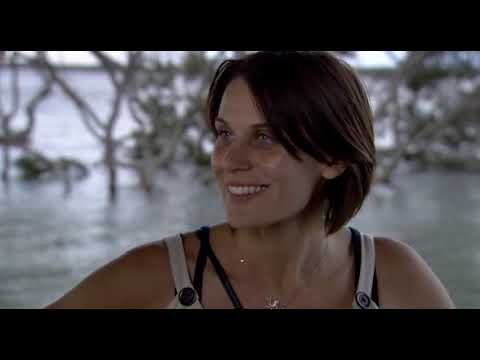

BLACK WATER: A Gripping Survival Horror with a Raw, Realistic Edge
Release Year: 2007

Starring: Diana Glenn, Maeve Dermody, Andy Rodoreda, Fiona Press

Rating: 7.8/10

Genre: Survival Horror
Introduction
In the annals of survival horror, few films manage to achieve the visceral, suffocating terror that Black Water brings to the table. Set against the unforgiving backdrop of Northern Australia’s mangrove swamps, the film unfolds with an unrelenting pace that captures the essence of primal fear. Directed by Andrew Traucki, Black Water sets itself apart from other survival films by focusing on realism and building tension with every passing moment.
Plot Overview
The story follows Grace (Diana Glenn), her younger sister Lee (Maeve Dermody), and Grace’s boyfriend Adam (Andy Rodoreda), who embark on a seemingly harmless boat tour through the remote swamps. What starts as an idyllic, nature-filled vacation quickly descends into chaos when their boat is capsized by a massive saltwater crocodile, forcing the trio to fight for survival. Stranded in a perilous environment, with only the treacherous waters and towering trees for shelter, they are forced to confront not only the relentless predator lurking beneath but also their own survival instincts.
Performance and Direction
The performances in Black Water are both raw and realistic, lending the film a grounded atmosphere that heightens the stakes. Diana Glenn, as Grace, delivers a standout performance, portraying a woman whose maternal instincts are pushed to their breaking point. Maeve Dermody as Lee is equally compelling, playing the role of the protective younger sister with nuance and empathy. Andy Rodoreda brings an understated, yet palpable tension to Adam, who’s torn between trying to protect his loved ones and his own growing sense of hopelessness.
Andrew Traucki’s direction is particularly noteworthy for its refusal to indulge in flashy CGI or over-the-top action sequences. Instead, the film thrives on its minimalism, relying on suspense and tension to drive its horror. The lack of heavy special effects gives the film an edge, allowing the real terror to come from the primal fear of being hunted by a giant predator in an unforgiving environment. It’s a refreshing take on survival horror that places survival at the forefront, rather than focusing on gratuitous violence.
The Crocodile: A Force of Nature
The real star of the film, however, is the saltwater crocodile itself — a formidable presence that never seems far from the trio’s minds. Black Water doesn’t just depict the crocodile as a mindless killing machine; instead, it creates a sense of dread by showing how intelligent and patient this predator is. The tension that builds throughout the film stems from the uncertainty of the crocodile’s next move, a perfect representation of the film’s commitment to realism and grounded terror.
The Final Act
The final act of Black Water brings everything to a head in a climax that is both emotionally charged and physically harrowing. The stakes are raised to their highest as the characters are pushed to the brink of exhaustion and despair. The resolution, while satisfying, doesn’t let the audience off the hook easily. There are no easy answers here — just the harsh reality of nature’s indifference and the strength of human resilience.
Conclusion
Black Water is a film that stands out in the survival horror genre not because of its action or gore, but because of its ability to build a constant, creeping tension. The film’s commitment to realism, paired with solid performances and expert direction, makes it one of the more effective survival horrors of its time. It’s a film that doesn’t need fancy effects to make you feel the terror — the raw, claustrophobic atmosphere does that on its own. If you’re a fan of slow-burn thrillers or survival horror, Black Water is an experience worth diving into.