



The Epic Saga That Redefined Fantasy
Peter Jackson’s The Lord of the Rings trilogy stands as one of the greatest cinematic achievements of the 21st century. A tale spun from J.R.R. Tolkien’s monumental novels, this trilogy is more than just a story about a ring—it’s an exploration of friendship, sacrifice, and the eternal battle between light and darkness. With stunning visuals, memorable characters, and a world rich in mythology, The Lord of the Rings sets the gold standard for epic fantasy on film.

Frodo Baggins: The Reluctant Hero
At the heart of this grand narrative is Frodo Baggins (Elijah Wood), a simple hobbit thrust into a world of unimaginable peril. Entrusted with the One Ring, Frodo’s journey is as much about internal growth as it is about the external conflict. The character arc of Frodo is emblematic of the trilogy’s overarching theme: heroism isn’t born from grand gestures, but from the quiet resolve to do what’s right in the face of overwhelming odds.

The Fellowship: A Team of Diverse Heroes
Frodo is not alone on his journey. He is accompanied by the Fellowship, a diverse group of heroes, each with their own strengths and vulnerabilities. Gandalf (Ian McKellen), the wise and powerful wizard; Aragorn (Viggo Mortensen), the conflicted heir to the throne of Gondor; Legolas (Orlando Bloom), the graceful elven archer; Gimli (John Rhys-Davies), the fiery dwarf; and Boromir (Sean Bean), the tragic soldier—each contributes something unique to the quest.

The War of the Ring
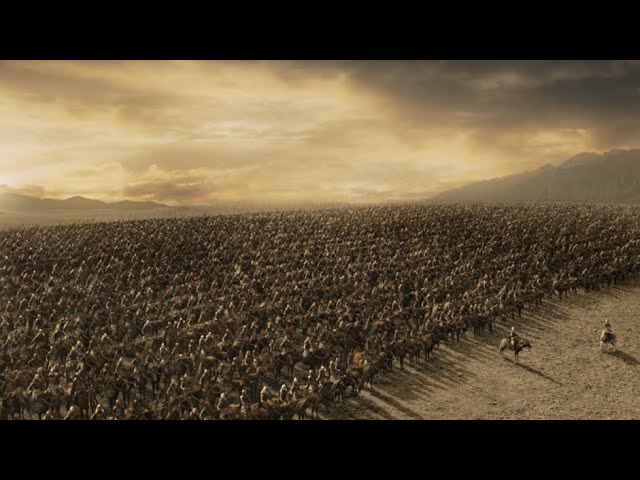
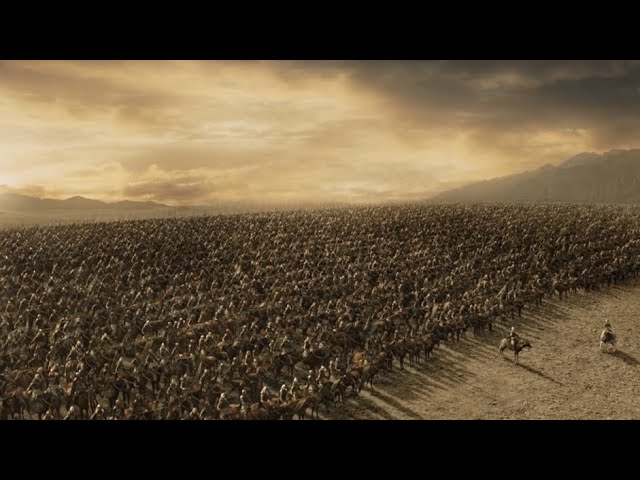
Throughout the trilogy, the War of the Ring rages across Middle-earth. From the quiet rural beauty of the Shire to the battlegrounds of Helm’s Deep and the final clash before Mount Doom, Jackson’s direction pulls the audience into a world where every victory feels earned, and every loss carries weight. The Two Towers offers one of cinema’s greatest battle sequences in the Battle of Helm’s Deep, while The Return of the King delivers a satisfying, emotional conclusion, where the fall of Sauron brings closure to years of conflict.
The Power of Visuals and Sound
The Lord of the Rings trilogy excels not only in its storytelling but also in its use of groundbreaking visual effects and sound design. Howard Shore’s hauntingly beautiful score is woven throughout, with themes that capture the vastness of Middle-earth’s landscapes and the intimacy of its characters’ journeys. The effects, though groundbreaking at the time of release, have only aged better with time. The portrayal of Gollum (Andy Serkis) is an exceptional feat in motion capture, providing one of the most compelling and tragic characters in modern cinema.
The Legacy of Middle-earth
As we look back on the trilogy, its legacy is undeniable. The Lord of the Rings trilogy not only redefined what epic fantasy could be, but it also revolutionized filmmaking in ways that are still being felt today. The films ushered in an era of ambitious world-building, emotionally rich storytelling, and technical innovation. It remains a monumental achievement that transcends the genre, appealing to fans of all kinds of cinema.
Conclusion
The The Lord of the Rings trilogy is, without a doubt, a cinematic masterpiece. A film that transports audiences to another world, it is a testament to the power of storytelling and the enduring nature of hope and courage. As Frodo’s journey comes to a close, so too does the tale of an era in cinematic history. A true triumph of film, The Lord of the Rings is more than a series—it is a cultural touchstone, a legacy for generations to come.