

A Myth Rewritten in Fire and Ash
There is something eternally tempting about returning to Troy. Not because the story needs retelling, but because every generation believes it can finally tell it right. TROY II: The Fall of Achilles, presented as a concept trailer, imagines the Trojan War not as an epic of glory, but as a terminal illness—slow, cruel, and inevitable. It reframes myth through the lens of survival, revenge, and moral erosion, asking a simple but unsettling question: what happens after heroes win?

This is not a sequel interested in pageantry for its own sake. It is interested in aftermath. The horse has entered the gates. The war is over. And Troy burns not as spectacle, but as consequence.

Story and Themes: When Legends Begin to Bleed
The conceptual narrative pivots away from Achilles as the untouchable demigod and toward Paris as something far more dangerous: a man who has learned. Jason Statham’s Paris is no longer the impulsive romantic who loosed an arrow and hid behind myth. He is a survivor shaped by loss—of brother, home, and innocence.

The trailer suggests a lean, almost ruthless story structure. There is no illusion of saving Troy. The city is already a corpse. What remains is a nocturnal hunt through collapsing temples and burning streets, where Paris stalks Achilles not as an equal, but as a tactician. It is a reversal of Homeric values: honor yields to efficiency, glory to necessity.
The thematic core is clear and compelling:
- Heroism as a public performance versus survival as a private instinct
- Mythic invincibility confronted by human ingenuity
- The cost of war after songs stop being sung
In this version of Troy, legends are not immortal—they are simply late to die.
Performances in Concept: Casting as Commentary
Concept trailers live or die on casting, and this one understands symbolism. Jason Statham as Paris is a deliberate provocation. Statham’s screen persona—physical, relentless, emotionally compressed—redefines Paris not as a coward, but as an assassin forged by ruin. It is an intriguing subversion that feels less like stunt casting and more like thesis.
Brad Pitt’s Achilles, returning in spirit if not in confirmed reality, remains a monument to martial ego. Here, Achilles is not merely strong; he is complacent. The idea that the greatest warrior might fall not to strength, but to strategy, gives the concept its dramatic spine.
Supporting roles, glimpsed largely in implication and flashback, reinforce the tone:
- Eric Bana’s Hector as a moral ghost haunting Paris
- Diane Kruger’s Helen as a survivor rather than a symbol
- Sean Bean’s Odysseus as the architect of ruin, not its hero
These are not characters seeking redemption. They are reckoning with memory.
Visual Style: A Funeral for an Era
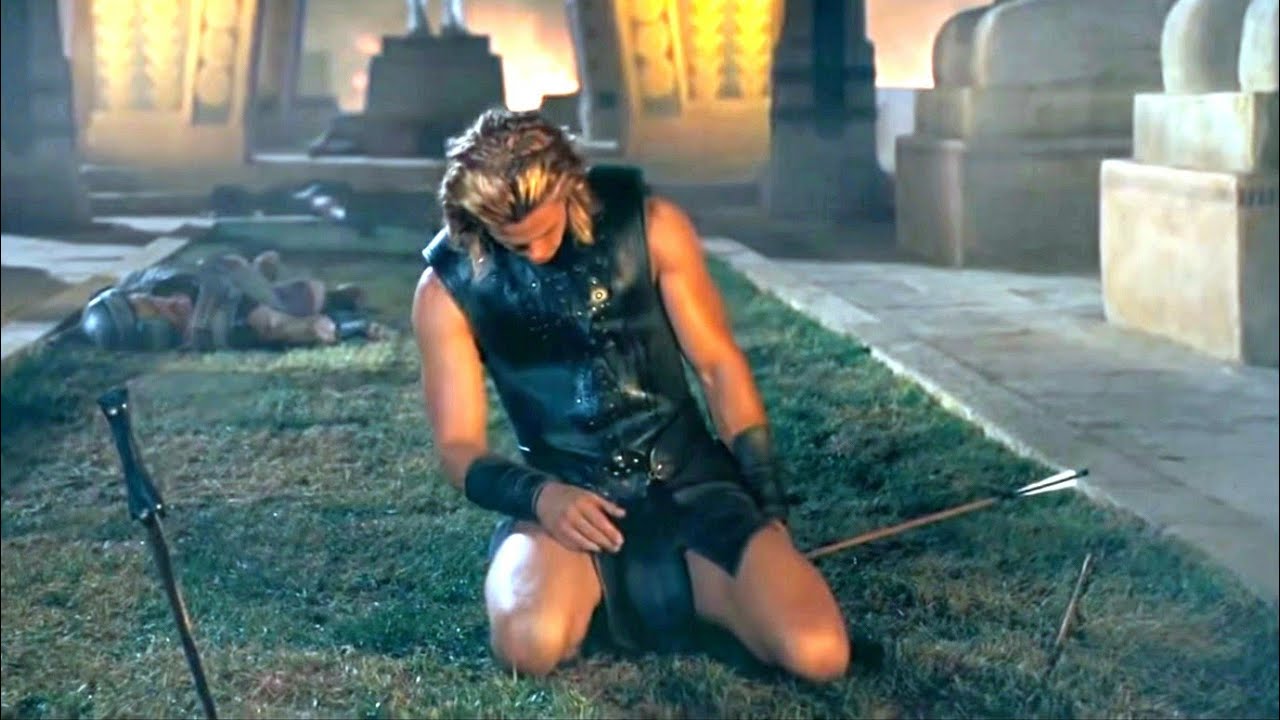
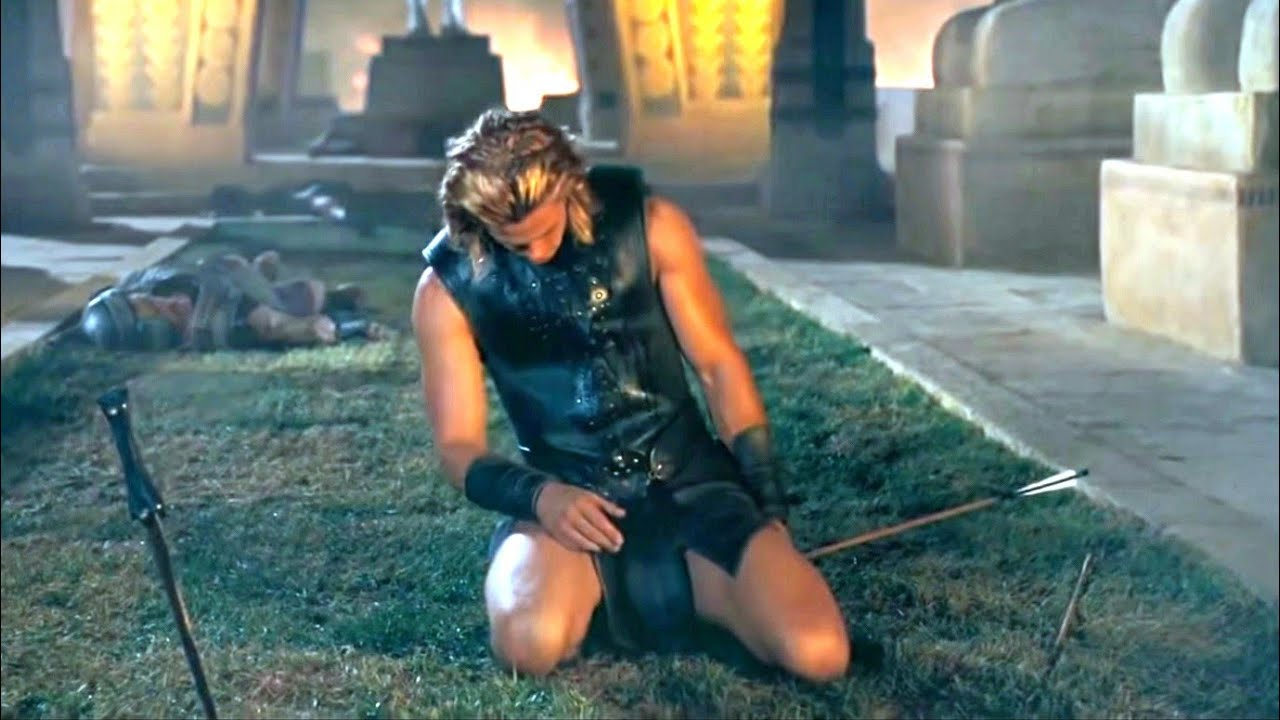
Visually, the concept leans hard into brutality. Troy is not bathed in golden nostalgia, but choked with smoke and rain. Fire dominates the palette, not as beauty, but as erasure. Armor feels heavy. Mud clings. The Trojan Horse looms less as clever trick than as omen.
The trailer’s most striking images suggest a cinematic language closer to a revenge thriller than a classical epic:
- Close-quarters combat in rain-soaked alleys
- Burning temples collapsing into shadow
- Silhouettes framed by ash instead of sunlight
It is not interested in wide shots of armies. It is obsessed with corners, thresholds, and moments where myth fails to protect flesh.
Sound and Tone: Less Triumph, More Dread
Gone is the swelling heroism typical of sword-and-sandal cinema. In its place is a low, grinding tension. Sound design emphasizes weight—footsteps on stone, armor scraping, fire roaring unchecked. The tone suggests inevitability rather than victory, aligning the film’s emotional register with tragedy rather than triumph.
The effect is immersive and oppressive, reinforcing the idea that this is not a story about winning a war, but about surviving its final night.
Concept Versus Reality: A Necessary Disclaimer
It must be stated clearly: TROY II: The Fall of Achilles is presented as a concept trailer, created using advanced AI techniques and recontextualized footage. It is not an announced production. Yet concept trailers often reveal something more honest than marketing campaigns—they reveal desire.
What this trailer desires is a Trojan War stripped of romance and reframed as moral collapse. It asks whether myth still matters when cities burn, and whether the greatest legacy belongs to those who seek glory or those who endure.
Final Thoughts: A Dangerous, Compelling What If
As a piece of speculative cinema, TROY II: The Fall of Achilles is more thoughtful than many finished blockbusters. It understands that myths survive not because they glorify heroes, but because they reflect human contradiction. By turning Paris into a calculating survivor and Achilles into a vulnerable icon, it challenges the audience to reconsider who deserves remembrance.
If this concept were ever realized as a full film, it would not replace Troy—it would interrogate it. And that, in itself, is a worthy reason to return to the ashes.
Estimated reading time: 4 minutes